In today’s interconnected world, online education has become more than a stopgap solution—it is now a mainstream pathway for students seeking flexibility, accessibility, and global opportunities. For families considering online K–12 schooling, one question consistently arises: How can we be sure of the quality? The answer lies in accreditation, the rigorous process that validates a school’s programs, faculty, and outcomes against recognized standards.
Accreditation: The Global Seal of Trust
Accreditation is more than a stamp of approval; it is a comprehensive evaluation of whether a school delivers education that meets or exceeds established benchmarks. Globally, accrediting bodies ensure that K–12 institutions align with international standards. In the Philippines, DepEd recognition and PAASCU accreditation play a similar role, safeguarding parents and students from unrecognized or substandard providers.
For online schools, accreditation is especially critical. Unlike traditional brick‑and‑mortar institutions, online programs must prove that their digital delivery methods are effective, their faculty are qualified, and their student services—from counseling to extracurriculars—are robust. Accreditation reassures families that an online diploma will be recognized by universities and employers worldwide.
Why Accreditation Matters in Online K–12 Education
The importance of accreditation in online schooling can be summarized in several key areas:
- Curriculum alignment with global standards: Ensures students are prepared for international college admissions.
- Qualified teachers and pedagogy: Guarantees that instruction is not only convenient but also rigorous.
- Protection against diploma mills: Shields families from institutions that issue certificates without substance.
- Holistic student support: Validates that schools provide counseling, extracurriculars, and wellness programs.
- Global mobility: Accredited diplomas are recognized across borders, opening doors for students worldwide.
These factors are not just theoretical—they directly impact the lives of students navigating the increasingly competitive global education landscape.
Global Demands Driving Accreditation
The surge in online schooling after the pandemic highlighted the need for quality assurance. Parents now demand that online diplomas carry the same weight as traditional ones. Universities, too, scrutinize transcripts to ensure applicants come from accredited institutions. Employers increasingly value graduates who can demonstrate not only knowledge but also resilience and adaptability—traits nurtured in accredited online programs.
Accreditation also aligns with UN Sustainable Development Goal 4 (Quality Education), which emphasizes inclusive and equitable learning opportunities. By holding schools accountable, accreditation ensures that online education contributes to global progress rather than widening gaps.
Southville International School and Colleges: A Case Study
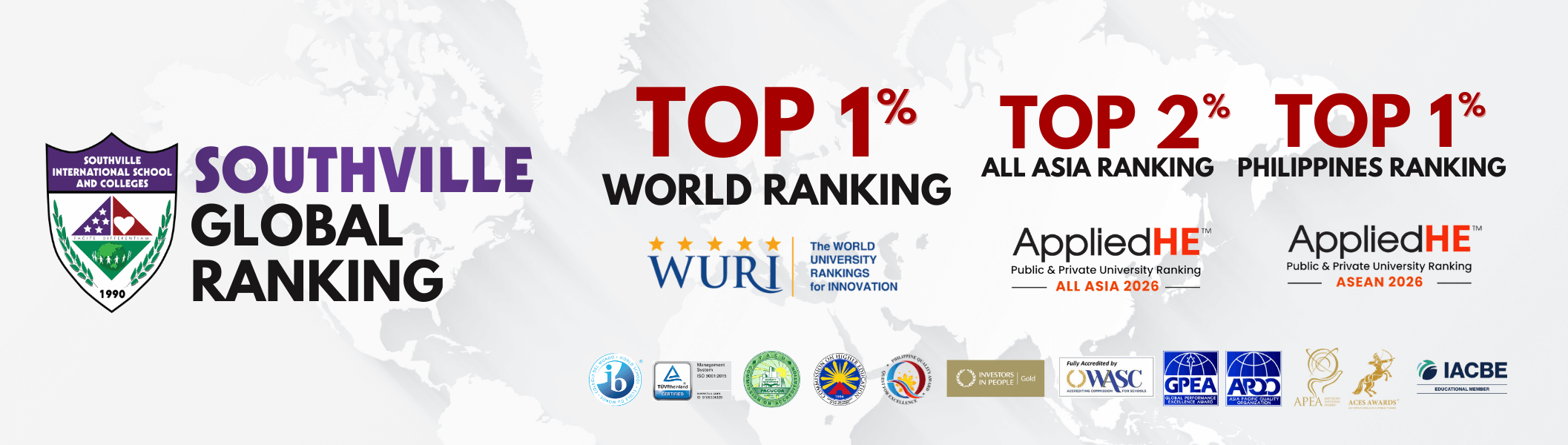
In the Philippines, Southville International School and Colleges stands out as a model of how accreditation ensures quality in online K–12 education, being accredited by the Western Association of Schools and Colleges (WASC USA). Long before the pandemic, Southville had already been offering alternative learning solutions, including blended and flexible learning programs. This foresight meant that when the pandemic struck, Southville was able to transition seamlessly to fully online delivery without compromising quality.
Southville’s commitment to accreditation translates into tangible benefits for students. Its online high school program emphasizes critical thinking, communication, and research skills—preparing learners not just for exams but for lifelong success. The school’s accreditations from organizations such as the Asia‑Pacific Quality Organization (APQO), which recognized Southville International School and Colleges’ Virtual Online Learning and Teaching or VOLT as a Platinum Awardee for Online Teaching, and recognition from DepEd further underscore its dedication to excellence.
Accreditation is not just about institutional recognition—it impacts real families. One Southville parent, Arjumand Nageen Ahsan, shared her experience during the pandemic:
“Like all other parents, I was concerned for the education continuity plan for my kids amid the prevailing situation. SISC was the first one to transition all the face‑to‑face studies to an e-learning system. Hence, e‑learning is not about replacing teachers with technological gadgets. In fact, through this, you resolve speed, time, and distance-related issues that could disrupt the studies. SISC was able to transition its classroom learning to 100% digital learning platforms. I am so proud of SISC management and teachers for holding virtual classes and working from home, and also adjusting to the challenges while delivering the education.”
She added that while her children missed sports, cultural shows, and hanging out with friends, Southville provided virtual tours and activities to keep them engaged. “Despite physical distance, I see a lot of collaboration and innovation in my kids. A big thanks to SISC management and teaching staff for delivering us the excellence at our doorstep.”
This testimonial reflects the lived experience of families who benefit from Southville’s accredited programs. It highlights the balance between academic rigor and supportive community—two pillars of quality education.
Accreditation is the backbone of trust in online K–12 education. It ensures that schools meet global standards, protect families from substandard providers, and prepare students for international opportunities. As global demands for quality education intensify, accredited institutions like Southville prove that online schooling can deliver excellence, inclusivity, and recognition across borders.
For families in the Philippines and beyond, Southville’s example demonstrates that accredited online K–12 schools are not just an alternative—they are a gateway to a future where quality education knows no boundaries.












Leave a Reply